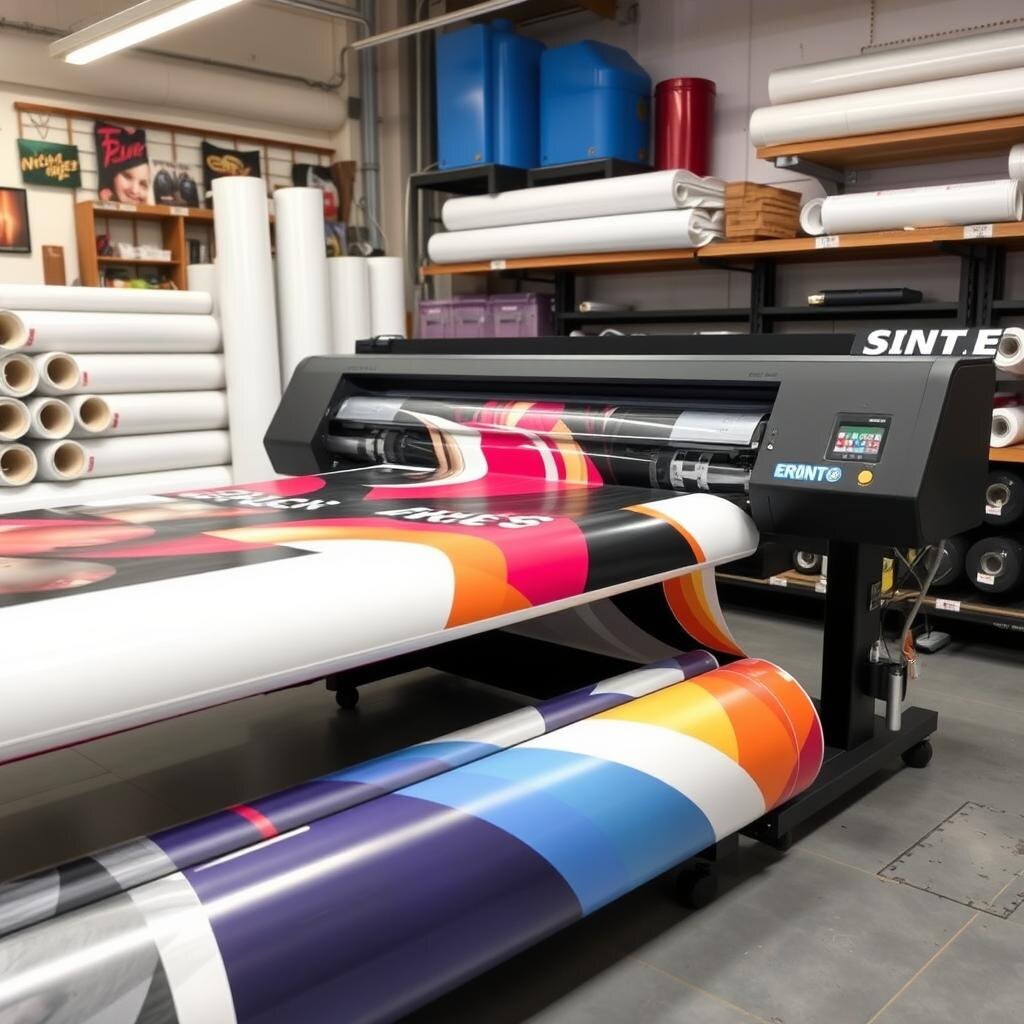
A wrap shop's revenue lives inside its equipment. A roll-to-roll large-format printer, a plotter that cuts your contours, a laminator, IR curing lamps, heat guns and a wall of premium film — lose any one of the big machines and production stops cold. Yet many shop owners assume their commercial property policy has all of that handled. Often it doesn't, at least not the way you'd want. This article covers how to actually protect your gear and your film inventory.
Why Your Property Policy May Fall Short on Tools
Standard commercial property forms are written around a fixed building and its contents. They tend to under-serve three things a wrap shop cares about: mobile equipment that travels to fleet jobs, high-value individual items like a six-figure printer, and gear that's off-premises when a loss happens. A property policy might cover a stolen workbench fine and then leave you arguing about a plotter that was on a job site.
That's where a purpose-built solution comes in.
Tools & Equipment Insurance (Inland Marine)
Tools & equipment insurance, written as an inland marine policy, is built for movable, high-value business property. It covers your gear against theft, fire and accidental physical damage on a broad, often replacement-cost basis — whether the equipment is at your shop, on the road, or at a customer's location for an on-site wrap. Typical scheduled and blanket items include:
- Large-format printers, plotters/cutters and laminators — usually scheduled, each listed with its own limit
- Heat guns, IR lamps, squeegees, knifeless tape and small hand tools — often a blanket limit for unscheduled items
- Rented or borrowed equipment, with optional add-on coverage
- Newly acquired gear, covered for a grace period before you formally schedule it
Because a single large-format printer or plotter failure can shut down your whole operation, inland marine isn't a luxury — it's continuity insurance for the machines you can't work without.
On-Site vs. In-Transit: Coverage That Follows the Gear
One of the main reasons to choose inland marine over relying on property coverage is portability. A good tools & equipment form covers your gear:
- On-site at the shop — the default location where most equipment lives
- In transit — loaded in the van on the way to a fleet wrap, where road accidents and theft from a parked vehicle are real risks
- At a job site — performing an on-location install, away from your building's protections
For shops that do fleet work in customers' yards or off-site events, this travel coverage is the whole point. Property coverage anchored to your address won't follow a heat gun stolen from a job site.
Theft & Damage vs. Equipment Breakdown — Two Different Things
Here's a distinction that trips people up. Tools & equipment / inland marine covers external causes of loss — theft, fire, dropping a unit, vandalism. It does not cover a machine that fails from the inside.
When a printhead burns out, a motor seizes, or a control board fries from an electrical surge, that's mechanical or electrical breakdown — a separate coverage usually called equipment breakdown. If your printer dies of its own internal failure, inland marine won't respond; equipment breakdown will. Shops with heavy, electronics-laden machinery should carry both so there's no gap between "something hit it" and "it broke on its own."
Don't Forget Your Film Inventory
Your rolls of cast vinyl, laminate, PPF and printed media are real money sitting on racks. Commercial property covers this inventory as stock against fire, theft, water and storm perils — and in some programs, film stock can instead be scheduled as inventory under the inland marine policy. Either way, the goal is the same: a fire or break-in that destroys a wall of premium film is a paid loss, not a write-off.
Talk to your agent about how your account is structured so it's clear which policy pays for the rolls. The worst time to learn that inventory fell between two policies is after a loss.
Putting It Together
A complete equipment-protection picture for a wrap shop usually looks like this:
- Inland marine (tools & equipment) — printers, plotters, heat guns and kits against theft, fire and accidental damage, on-site and in transit
- Equipment breakdown — internal mechanical/electrical failure of your machines
- Commercial property — the building or tenant improvements, fixtures, and film/PPF inventory
- Business income — lost revenue while a covered loss keeps you offline
Cost varies widely with the value of what you schedule — tools & equipment coverage can range from roughly $150 to $4,500+ per year depending on how much high-end gear is listed. That's a small line item against the price of a printer you can't run a single job without. Schedule your big machines accurately, add breakdown for the electronics, and make sure your film inventory has a clear home — and a bad day in the shop stays a covered event instead of a shutdown.