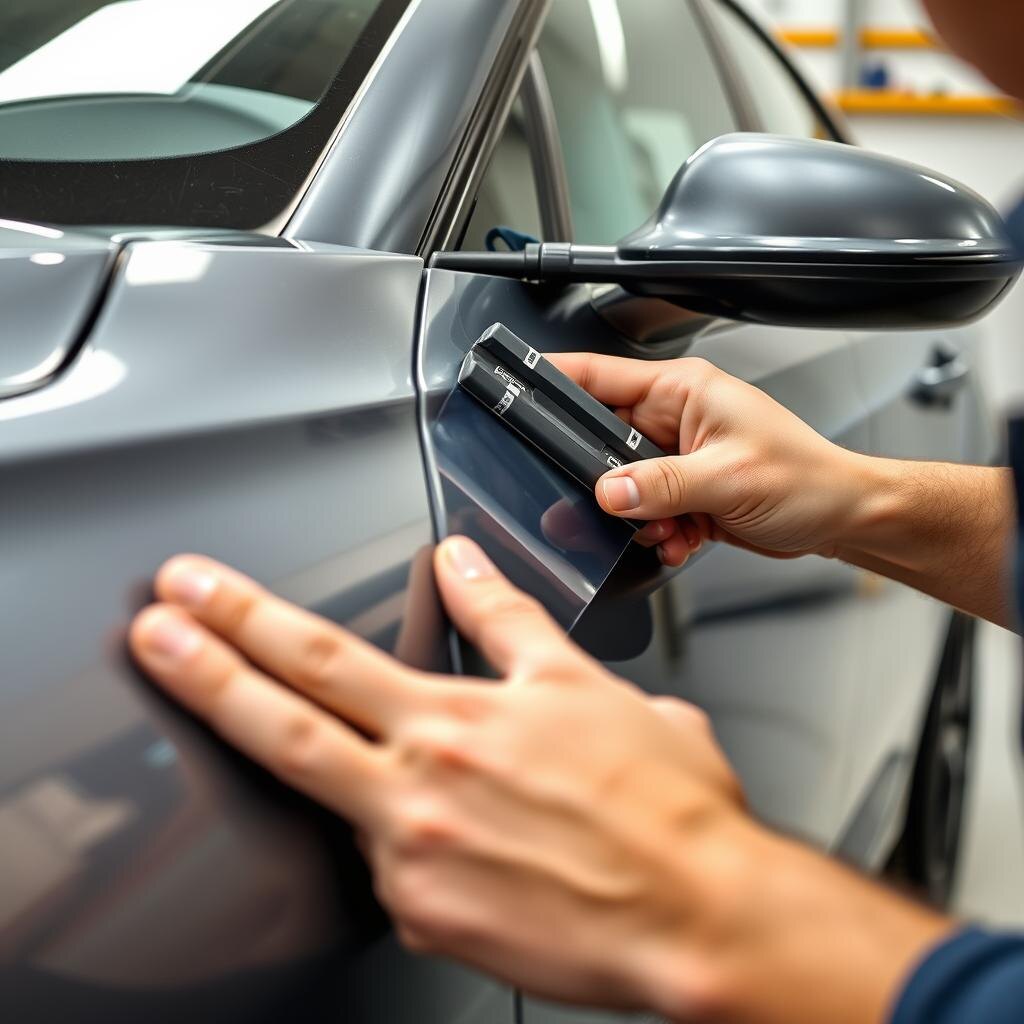
Every wrap installer has had a job come back. The vinyl bubbles along a body line, an edge lifts after the first hot week, a panel silvers, or a fleet wrap fails across half a dozen vehicles at once. The customer wants it redone — reprinted, re-stripped, re-applied — and they want it now. The question that decides whether that callback dents your week or sinks your quarter is simple: does your insurance pay to redo your own work? With general liability alone, the answer is no.
The "Your Work" Exclusion in Plain English
General liability (GL) is designed to cover damage you cause to other people's property and persons — not the quality of your own product. To enforce that line, GL contains "your work" and "your product" exclusions. They remove from coverage the cost of repairing or replacing your own defective installation.
So when a wrap you applied fails and has to be redone, GL treats the cost of the redo as a business expense, not an insured loss. The reasoning is that workmanship quality is within your control and would otherwise turn a liability policy into a performance warranty. The result for you is a gap: the most common claim in the trade — a failed install — is exactly the one GL won't pay.
What Professional Liability / Installation E&O Covers
Professional liability, also called installation errors & omissions (E&O), is the coverage built for that gap. It responds to the financial loss a customer suffers because of a mistake, oversight or substandard installation. For a wrap or graphics shop, that typically includes:
- Faulty workmanship / defective installation — the core "your work" gap
- Bubbling, lifting, edge-peeling, silvering, tunneling and premature film failure
- Errors in measurement, color, design or fitment
- The cost to redo the work — reprinting large-format graphics, materials, and re-wrap labor
- Legal defense costs for allegations of professional negligence
In other words, E&O turns "we'll eat the cost and hope it doesn't break us" into an insured event with a defined deductible and limit.
Why Fleet Jobs Multiply the Risk
A single failed one-off wrap is painful. A failed fleet wrap is a different order of problem. When you wrap twelve delivery vans with the same printed media, the same laminate and the same technique, a defect is rarely isolated — if the adhesion was wrong or the print delaminated, it tends to show up across the whole fleet.
Now the redo cost is twelve reprints, twelve strip-and-reapply labor cycles, and a commercial customer whose branded vehicles are off the road. Multiply your typical single-vehicle redo cost by an entire fleet and you can see why shops chasing commercial contracts treat E&O as essential rather than optional. PPF specialists face the same exposure — improper cut lines or film failure can be argued as professional error across every panel treated.
Economic-Loss Claims: The Hidden Cost
The redo itself is only part of the exposure. Customers — especially commercial ones — can claim economic loss that flows from the defective work. A wrapped food truck that can't operate during the redo loses daily revenue. A fleet pulled off the road loses billable routes. A dealership's demo vehicle misses a sale event.
These consequential losses are precisely the kind of financial harm professional liability is structured to address, where pure GL would not respond at all because no third-party bodily injury or external property damage occurred. The harm is economic, tied directly to your professional performance — E&O territory.
Do You Need It If You Only Do Small Jobs?
A common objection: "I only do the occasional one-off wrap — is E&O overkill?" Consider the math. A single high-end full wrap with premium cast vinyl and custom print can cost several thousand dollars in materials and labor to redo. One disputed failure can wipe out the margin on many clean jobs. E&O caps your downside on any workmanship dispute, and the premium is modest relative to that protection.
How E&O Fits With Your Other Coverage
It helps to see the three core liability coverages as a set, each plugging a different hole:
- General liability — third-party injury and damage at your shop (slip-and-fall, toppled rolls)
- Garagekeepers — damage to the customer's vehicle in your care (the CCC gap)
- Professional liability / installation E&O — redoing your own defective work (the "your work" gap)
None of the three replaces the others. A shop relying on GL alone is exposed on two of its three most likely claim types. Add installation E&O, and the callback that used to threaten your cash flow becomes a covered event — defended, paid, and behind you.